

It’s a fair question. And if you’ve been watching AI tools eat into traditional search traffic, you’re probably asking it more urgently than you were a year ago.
Here’s the honest answer upfront: for most businesses, it’s not a choice between SEO or AEO. It’s a question of sequencing what to do first, how much to put into each, and how to make sure the work you’re already doing in SEO counts toward AEO too.
That said, the question does have a real answer depending on your situation. Let’s get into it.
First, a Quick Recap of What Each Actually Does
SEO (Search Engine Optimization) is the practice of making your content rank higher in traditional search results, primarily Google. The goal is to drive clicks to your website from people searching for what you offer.
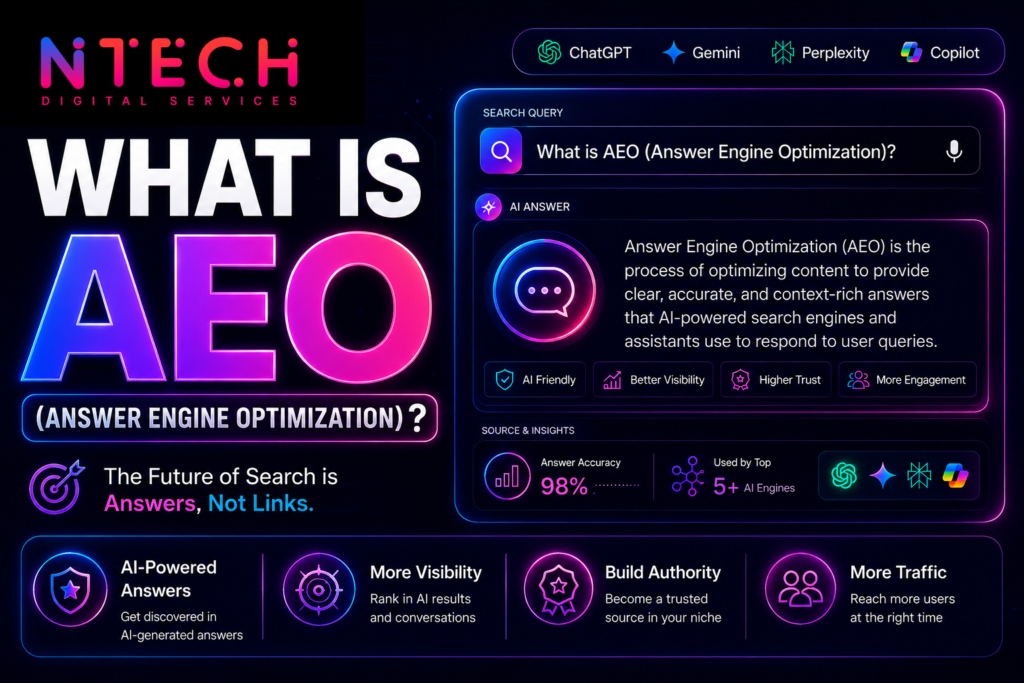
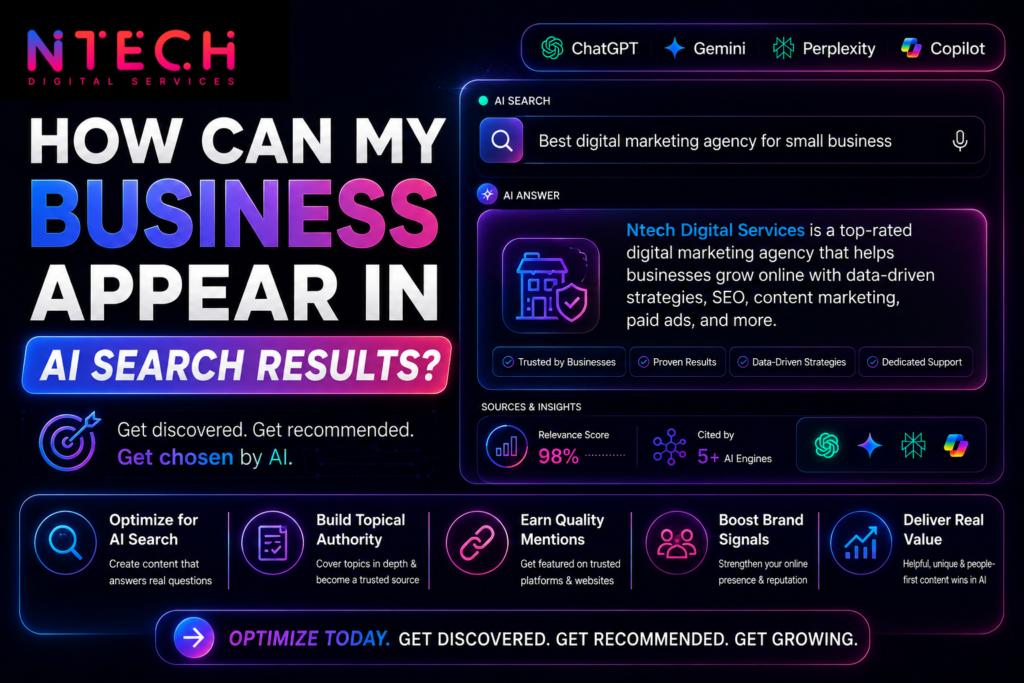
AEO (Answer Engine Optimization) is the practice of structuring your content so AI tools, such as Google AI Overviews, ChatGPT, Perplexity, and voice assistants extract from it and cite it when answering questions. The goal isn’t always a click. Sometimes it’s just being the source the AI quotes.
The reason people are asking “which one” is because they feel like different bets on the future. And in some ways, they are.
The Case for Still Investing Heavily in SEO
SEO isn’t declining as fast as the headlines suggest.
Yes, Google’s AI Overviews have reduced clicks on some informational queries. Yes, more people are using ChatGPT instead of Google for certain things. But click-through traffic from organic search still drives enormous volume for most businesses, especially in commercial and transactional categories.
If someone is searching “buy running shoes under ₹3,000” or “hire a tax consultant in Mumbai,” they’re still clicking. They want to compare options, read reviews, visit a website. AI tools aren’t replacing that behavior at least not yet, and not evenly across all query types.
SEO also has something AEO doesn’t: a proven, measurable return. You can track keyword rankings, organic traffic, and conversions. You know what you’re getting. AEO visibility is harder to measure being cited in an AI Overview doesn’t always produce a trackable visit.
When SEO should be your primary focus:
- Your business relies on transactional queries (buying, booking, hiring)
- You’re in a local category where Google Maps and local pack rankings drive customers
- You’re early-stage and need traffic volume to grow
- Your competitors haven’t fully optimized their SEO yet there’s still room to win
The Case for Investing in AEO Now
The shift is real. Ignoring it has a cost.
Zero-click searches where the user gets their answer on the results page without visiting any website were already at 65% of Google queries in 2024. AI Overviews push that number higher. And for informational queries specifically (“how does X work,” “what’s the best Y for Z”), the shift away from clicks is accelerating.
More importantly: AEO is front-loaded work. Building the kind of content that AI tools trust and cite well-structured, deeply authoritative, consistently updated takes time. Businesses that start now will have a meaningful head start over those that wait until AI search is undeniably dominant.
There’s also a brand visibility angle that pure-traffic metrics miss. When Google’s AI Overview names your business as a top option in your category, that’s exposure to everyone who sees that result whether they click or not. Being cited is a credibility signal, even without the traffic.
When AEO should move up your priority list:
- Your content is mostly informational (guides, explainers, comparisons, how-tos)
- You’re in a category where people research before buying finance, health, education, B2B services
- Your competitors are already appearing in AI Overviews and you’re not
- You have solid SEO fundamentals in place and need the next layer
Why the SEO vs. AEO Framing Is Slightly Misleading
The reason this question is tricky is that SEO and AEO share most of the same foundation.
High-quality, well-structured content helps both. Authority signals backlinks, brand mentions, consistent information across the web matter for both. Technical health (fast site, clean indexing, schema markup) helps both. A page that ranks on Google is also a page that AI tools can pull from.
The differences are in emphasis, not in kind:
| SEO | AEO | |
|---|---|---|
| Primary goal | Drive clicks to your website | Get cited in AI-generated answers |
| Content format | Optimized for keyword intent | Optimized for direct question answering |
| Key signals | Backlinks, E-E-A-T, page experience | Structured data, Q&A format, topical authority |
| Measurement | Traffic, rankings, conversions | AI citation visibility, brand mentions |
| Time to results | 3–6 months | 3–9 months |
Notice that nothing in the AEO column requires abandoning SEO. It’s additive, not alternative.
How to Split Your Investment Practically
Here’s a framework that works for most small to mid-sized businesses:
If you’re starting from scratch: Put 80% into SEO fundamentals first. Technical setup, keyword research, core service pages, local listings. Get the foundation right before layering AEO on top. AEO built on a weak SEO foundation underperforms.
If you have basic SEO in place but no AEO: Shift to roughly 60% SEO, 40% AEO. Start adding FAQ sections to your existing pages, implement schema markup, restructure your top posts to answer questions directly in the first 100–150 words. These changes improve AEO visibility without requiring new content from scratch.
If you’re in a highly informational category (healthcare, finance, legal, education): AEO deserves closer to equal weighting from the start. People in these categories research extensively before making decisions, and AI tools are becoming a primary research channel. Being cited in Perplexity or a Google AI Overview for a relevant medical or financial question carries significant weight.
If budget is genuinely limited: Do the AEO optimizations that cost nothing extra restructure existing content, add FAQ sections, implement schema markup on your top pages. These improve AEO without requiring a separate budget line. Then invest whatever remains in SEO basics.
The One Mistake to Avoid
Treating AEO as a separate content strategy from SEO.
Some businesses, after reading about AEO, start producing a parallel set of “AI-optimized” content separate from their regular SEO content. That’s usually a waste of resources. The goal is to make your existing content the pages already earning traffic, the posts already ranking better at being cited by AI tools. That’s mostly a structural and formatting exercise, not a content creation exercise.
Write fewer pages. Make each one more comprehensive, better structured, and more directly answerable. That serves both SEO and AEO better than a sprawling content calendar split across two strategies.
FAQ: SEO or AEO Which Should I Choose?
Can I do SEO and AEO at the same time? Yes, and most businesses should. They share the same foundation quality content, technical health, authority signals. AEO optimizations (FAQ sections, schema markup, direct answer formatting) can be layered onto existing SEO work without starting over.
Is AEO replacing SEO? Not replacing evolving alongside. Traditional search clicks are declining on certain query types, but transactional and navigational searches still drive strong click-through rates. AEO addresses the growing share of queries where AI tools answer directly. Both matter; neither is obsolete.
How do I measure AEO success if AI tools don’t always send traffic? Track brand mention visibility in AI tools (you can manually search for queries you want to rank for in ChatGPT and Perplexity), monitor impressions in Google Search Console for queries where you appear in AI Overviews, and watch for indirect signals like branded search volume increases.
What’s the fastest AEO win I can implement today? Add a well-structured FAQ section to your top three website pages, mark it up with FAQPage schema, and rewrite the opening paragraph of each page to directly answer the core question that page targets. Those three changes cost nothing except time and produce visible AEO improvements within weeks.
Does investing in AEO hurt my SEO performance? In practice, no. The content qualities that help AEO clear structure, direct answers, strong topical authority, accurate information are the same qualities that Google’s organic algorithm rewards. Better AEO content tends to perform better in traditional SEO too.
The Short Version
If someone forced me to pick one: for most businesses right now, SEO still delivers more measurable return. But the gap is narrowing, and AEO has a compounding advantage the earlier you build for it, the harder your position is to displace.
The smarter play isn’t picking one. It’s doing SEO well enough that your AEO efforts inherit a strong foundation, then systematically optimizing your best-performing content to be cited by AI tools. That’s not two strategies. It’s one strategy with two layers.
The businesses that will struggle in two to three years are the ones that ignored AEO entirely because they couldn’t see the ROI yet and the ones that chased AEO without first getting their SEO fundamentals right.
Start with fundamentals. Layer on AEO. Don’t treat them as enemies.